
Your five star rating depends on what your team catches. GIA® catches what they miss.
GIA®, powered by digitalhumanOS™, screens every resident for 46 clinical conditions using voice biomarker analysis — no additional staff, no lab work, no disruption to existing workflows. GIA® analyzes 2,500+ speech biomarkers in 40 seconds and writes results directly back to your EHR, helping administrators maintain survey readiness, protect star ratings, and grow census through better outcomes.
Key Facts
- Conditions Screened
- 46
- Screening Time
- 40-second natural conversation
- Staff Required
- 0
- EHR Integration
- Real-time
Improve your facility's performance and resident well-being with clinically validated screening that runs itself.
This content is intended for informational purposes and does not constitute medical advice. Citing research does not mean this page or the product has been independently peer reviewed.
Featured in McKnight's Long-Term Care News →
Listed on PointClickCare Marketplace
See how cognitive screening improves star ratings in post-acute care.
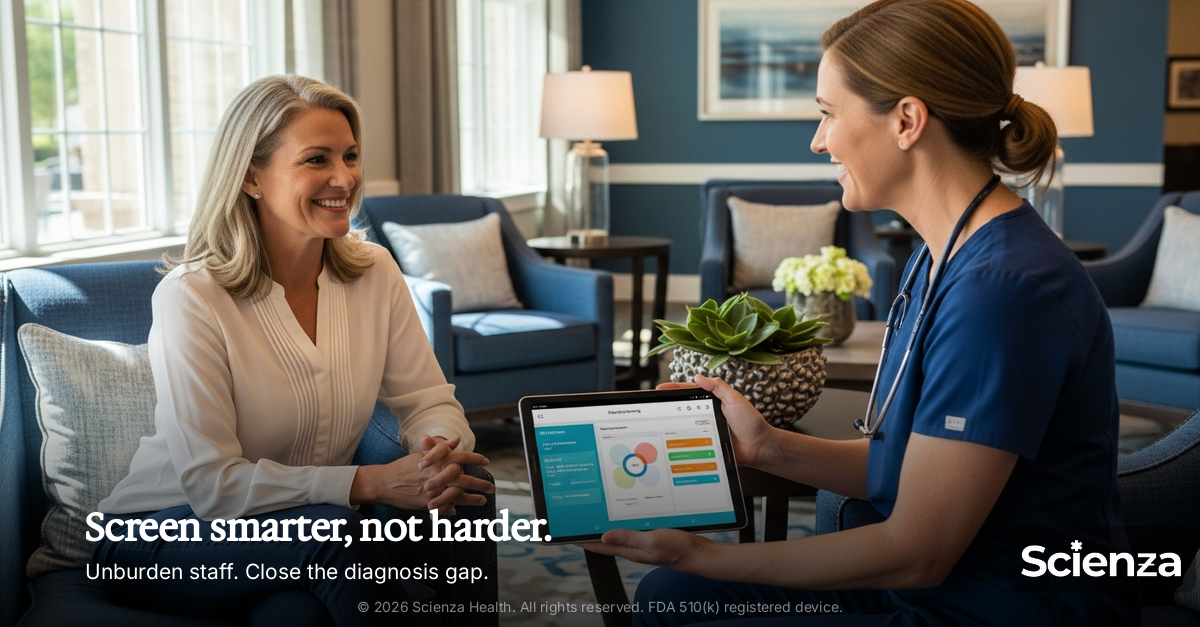
What happens when conditions go undetected?
Rating Vulnerability
Maintaining a high five-star rating is challenging when clinical gaps go undetected between visits.
Census & Revenue Pressure
Census and revenue are directly impacted by resident health outcomes and your facility's reputation.
Survey Readiness
Survey readiness is a constant source of stress and potential liability for administrators.
Referral Pipeline
Referrals depend on your reputation for excellent care — missed conditions erode that trust.
71% of senior living operators rank risk monitoring and predictive insights as their #1 wellness technology priority. Reducing hospitalizations ranks second.
— PointClickCare / Senior Housing News New Tech Adoption in Senior Living 2026 Survey
What measurable outcomes can you expect?
How do you protect your five-star rating?
GIA®, powered by digitalhumanOS™, provides a layer of clinical oversight, helping your team identify potential issues early and improve resident outcomes. This translates directly into a better reputation, higher ratings, and increased referrals.
What is your liability exposure from missed diagnoses?
By proactively screening for 46 conditions, GIA® helps mitigate risks associated with missed diagnoses and delayed interventions. This reduces potential liability and protects your facility.
How do you improve financial performance without adding staff?
Better resident outcomes lead to increased census, reduced hospital readmissions, and improved survey results – all of which contribute to a stronger bottom line. GIA®, powered by digitalhumanOS™, is an investment in your facility’s financial health.
How does GIA® handle survey-ready documentation?
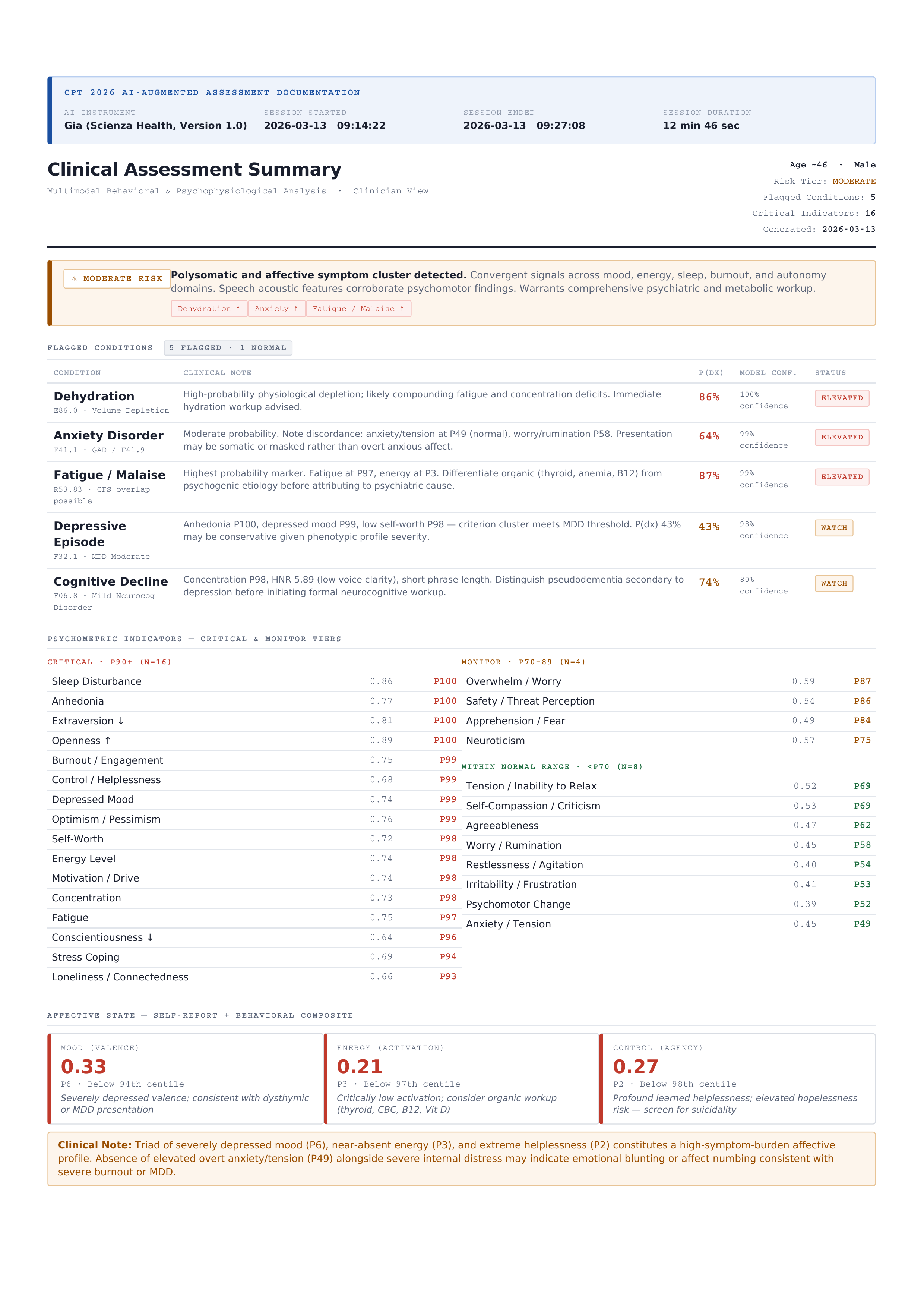
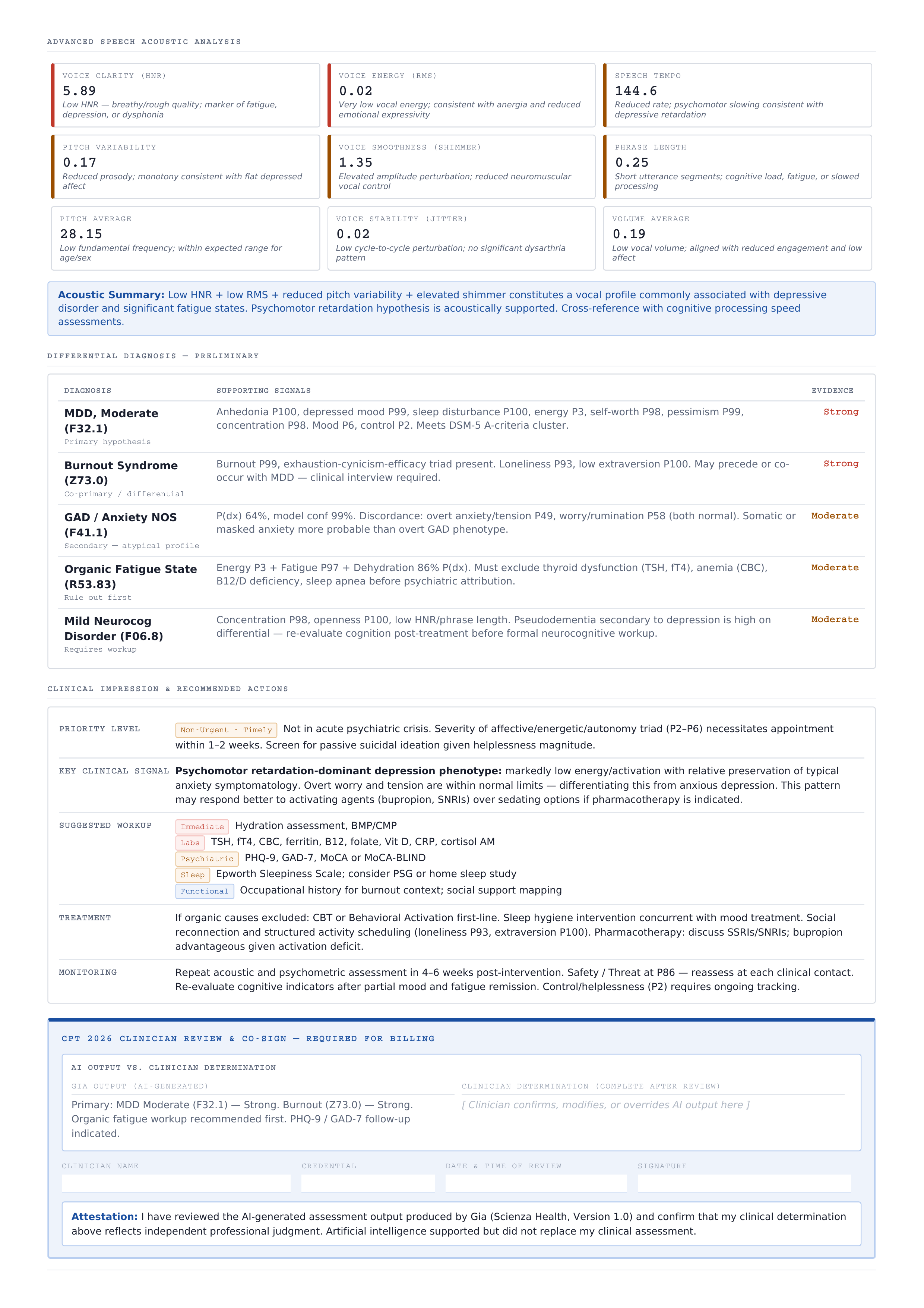
Every GIA® screening produces four documented artifacts that write back to your EHR automatically:
- The screening result with condition flags and severity
- A structured medical note
- The full conversation transcript
- The recorded patient video
This is the documentation surveyors want to see — and your staff no longer has to create it manually. Learn how CPT 96127 reimbursement works for cognitive screening in long-term care.
When a surveyor asks how you screen for cognitive decline, depression, or behavioral changes, the answer is in the EHR: timestamped, structured, and reviewable. No binder of paper assessments. No missing signatures. No gaps. GIA® integrates with PointClickCare, MatrixCare, Epic, Cerner, Netsmart, and American HealthTech — so the documentation lives where your team already works.
For facilities serving diverse patient populations — GIA®'s 92-language capability ensures every resident feels heard and at ease during their interaction. No interpreter scheduling required. All documentation in English in the EHR.
See all EHR integrations →GIA® Administers BIMS for MDS 3.0 Section C
CMS requires the Brief Interview for Mental Status (BIMS) for every skilled nursing facility resident under MDS 3.0 Section C — on admission, quarterly, and on significant change. GIA® administers the standardized BIMS interview and writes structured results directly to the EHR, supporting MDS coding and F-Tag compliance documentation.
- Administers the full BIMS interview during patient interaction
- Results structured into medical notes and written back to the EHR
- Supports MDS 3.0 Section C documentation requirements
- Also administers ADL assessments (Barthel Index, Katz Index) and IADL assessments (Lawton Scale, FIM) with EHR write-back
- Clinician reviews and approves all results before they enter the clinical record
- Reduces staff time for mandatory assessment documentation
GIA® administers BIMS and writes structured results to the EHR. A clinician reviews and approves every BIMS result before it enters the clinical record — clinical standard for MDS documentation.
How fast can you deploy?
GIA® comes pre-bundled on Samsung Health Grade Galaxy devices. No software procurement. No IT deployment project. No compatibility testing. The device arrives ready. Your clinical team is screening within hours of unboxing.
Common questions from administrators.
How does GIA® integrate with existing systems?
GIA®, powered by digitalhumanOS™, is designed for easy data exchange with most standard electronic health record systems. We can discuss your current setup and tailor the integration.
What kind of training is required for staff?
Minimal training is required. Your team will receive clear instruction on how to use the insights provided by GIA® to improve care.
How does this help with staffing shortages?
GIA® acts as an extra set of eyes and ears, helping your team focus on the most critical needs and improving efficiency.
What is the implementation timeline?
Implementation can be completed quickly, often within a few weeks, depending on your facility’s size and specific needs.
The Operator's Guide to Multimodal Clinical AI
EHR integration, staffing impact, reimbursement codes, deployment timelines, and the 5-layer governance framework — in one guide.
Proactive Decision Orders — Know Which Patients Need Attention Before Rounds.
PDO analyzes your facility’s PointClickCare data every night and surfaces a ranked list of patients who need clinical attention today — with the three specific reasons and the exact orders to place. Physicians review and approve every recommendation. No autonomous decisions. No alert fatigue. Just the right patients, every morning.
- 5 to 10 prioritized patients per facility per day
- Three clinical reasons per patient from their own EHR data
- Physician reviews and approves every recommendation
- Reduces avoidable hospital transfers
- Strengthens CMS star rating documentation
RELATED READING